What’s the difference between High Quality Food and Organic Food?

I hear from a lot of people thinking they are doing a good thing by buying organic fruits and vegetables from the supermarket. My experience of supermarket fruit and veg is that it is of very poor quality, even the so called organic. The problem is that of course the supermarket is trying to make as much profit as possible, so they buy the cheapest possible food they can, to sell to the public at the highest profit they can. Which means that it is grown on a massive industrial scale (including the organic), shipped from a long way away, fruit is picked too early, and the flavour and nutrition are low.

Try and find a local farmers market to buy food from and you will instantly know the difference. Even if the food on the farmers market is not certified organic, you can talk to the farmer personally and find out how they grow the food. You will probably find that it is fresher, fruit is riper and it all tastes a lot better – I think you notice the difference in flavour even more when you eat it raw. And it can even be cheaper than the supermarket, as there is no middle man taking a (large) slice of the profit.

To find your local farmers market in the UK, see www.farma.org.uk, or www.lfm.org.uk and www.weareccfm.com for London.

Why I added raw liver to my diet – Beyond Broccoli Book Review

This book review was first published in the Funky Raw magazine issue 23.

I was so happy to read this book, a book the raw food movement has been waiting for. Almost every book about raw food is about the raw vegan diet, with many people assuming raw food means raw vegan.

The author, Susan Schenck, was a raw vegan for 6 years and even wrote a book The Live Food Factor about the raw vegan diet, but over time she realised that the diet wasn’t working for her. A lot of research led to Susan writing Beyond Broccoli, which explains the reasons for what seems to be a common problem – people try raw veganism and feel wonderful for the first few years, before nutritional deficiencies start to show up.

For me, the fact that Susan was a vegan, and really wanted to make the vegan diet work for her is important. I feel this mirrors my experience of discovering the vegan diet and the ideals behind it, but finding it didn’t work long term for me either.

The first part of this book discusses vegetarianism. The chapter “Vegetarian Myths Dispelled” discusses the myths we are told and the real scientific answers, including “vegetarians live longer” which she shows is not true. “Vegetarian diets are more sustainable” is another myth that is proved false. It also includes a chapter on well known vegetarians who went back to eating meat.

Part two looks at the “Evolution of the Human Diet”, how agriculture changed the way humans were eating and theories that eating fish was the reason humans have larger brains.

Part three “Finding Balance in Fats, Carbohydrates, and Protein” is where Susan really gets into the details of creating the right diet for you. She looks at the different metabolic types, carb, protein and mixed. She says “So some people can do well with a high-carb diet, some need a high-protein diet and other do best on mixed.”

Everyone should read chapter 11, “Falling for the Big Fat Lie”, which discusses the fact that, contrary to popular opinion, eating fat does not make you fat…

There is also a whole chapter devoted (or maybe that’s not quite the right word) to “The China Study”. This chapter contains the critiques of both Susan and other researchers. The most important observation for me is “The fact is, none of the people in the study group were 100 percent vegan!”, which means that any conclusion from that study recommending a vegan diet is not scientific and frankly absurd.

So if you get this far in the book and decide you want to add meat back into your diet, you will probably need Part four, which goes on to the subject of “Morality, Spirituality, and Sustainability of Eating Meat”.

And then Part 5 “What’s for Dinner?” ties everything together, including sections on eating a balanced diet, why we need to eat our food raw (including any meat) and the safety of raw meat. The final chapter gives more specifics on what to eat.

There is a comprehensive bibliography at the end, references for the science bits and lots and lots of further reading if wanted.

Overall, this is an excellent book, I recommend it to everyone eating or wanting to eat a raw diet as it provides balance to all the other vegan books out there. And I especially think vegans should read this book – even if they are doing fine themselves on a vegan diet – just so that they can understand the reasons that not everyone can thrive on a vegan diet.

My personal experience with this book – it convinced me it was ok to try eating raw liver, which I have done several times now and feels like a very healthy food for me.

With 260 large pages, this is a comprehensive book. ISBN: 978-0977679522

Questions for Anthony Anderson?

I’m going to interview Anthony Anderson of RawModel.com soon and publishing it here on this blog. He’s coming to England next month to speak at the Vitality Planet event in London. His mission is to inspire others to plant paradise on the planet once again, promoting Permaculture and planting food forests. If you have any questions you want me to ask him, please post them in the comments section.

Edit: I’ve done the interview, read it here.

Raw in Athens

Until now, the only “raw food” we’ve had in Greece has been the fresh fruits and vegetables from the markets. It’s been of exceptionally high quality, but sometimes I want some prepared raw food… Synchronistically, I got an email from an American living in Athens about writing for the Funky Raw magazine, perfect timing for us to get some tips for raw food in the capital.

So on Friday night, we went to Nice ‘n’ Easy Bio Cafe, 60 Omirou Street, an organic restaurant which has 3 specifically raw items on the menu. They also have a range of salads which are almost raw. From the raw menu, I ordered a mock tuna dish, which was ok but fairly bland. I also got a green salad which came with goats cheese (not sure if from raw milk but I ate it, was delicious) and sun dried tomatoes, with a wine based dressing (probably not raw), this was really good. We tried to order the raw dessert, but they didn’t have any left – that’s the problem with places where raw food is only a small part of their menu. The website is only in Greek, but the menu was in English and the staff spoke English.

We had more success in the organic shop at 30 Nikis Street (not far from Syntagma metro), I think it is called Emporio Trofimon, but easy to spot next to a vegetarian café called Avocado with a colourful avocado painted on the wall. As well as the usual organic fruit and veg, there was a wide range of raw foods: raw chocolate bars (we got a couple of coconut Om bars), Biscru crackers, raw snack bars and a wide range of superfoods including lucuma, camu camu, acai, raw chocolate ingredients and more. Probably a better range than in most organic shops in the UK!

And now, what you’ve all been waiting for, the obligatory photos of the Acropolis:

How to make Fermented Butternut Squash

This recipe is so simple but I love it. There are only 3 ingredients, butternut squash (also works with other types of squash or pumpkin), salt and water. I’ve tried adding various flavourings and seasonings but I always go back to this simple recipe as it tastes the best.

I’ve talked about fermented foods before on this blog, they are wonderful for digestion, assimilation and detoxing and I eat several different fermented foods every day.

Start by cutting your squash into pieces suitable for grating, and then grate using a fine grater:

Pack the grated squash into a jar, a kilner jar works well. Don’t fill the jar right to the top, make sure you leave some space as it can bubble up during the fermentation.

Next, add salt water so that all the squash is covered by water. The ratio of salt is approx 1 teaspoon of salt per litre of grated squash – so for example the jar I used was 1.7 litres, so I used just over 1 and a half teaspoons of salt. The amount of water you will need will depend on how much water is naturally in the squash. So mix the salt into a small amount of water and pour in, then add more water if necessary.

Finally, place something on top of the squash to keep it all under the water. I use a stone, cleaned thoroughly first of course. Check every day to make sure that the squash is still under the water.

Store at room temperature during the fermentation process. It usually takes 3 to 4 days to ferment, although it will take longer in colder climates. You can taste after 3 days and see what is happening. Once it is fermented to your liking, you can store in the fridge to stop it fermenting more.

What is your favourite fermented food? Please leave your comments below.

Real Raw Lemon Cheese Cake Recipe

After a short break in London, we’re back on the road. We’re heading to Croatia, but had a little detour to Slovenia. It’s a beautiful country, loads of forest and wild nature. On Saturday we went to Ljubljana, the capital and found an amazing market. Loads of organic veg stalls, plus we got organic raw milk, raw butter, raw sour cream and raw cheese.

I love cheesecake, and it is actually very easy to make raw cheesecake, assuming you can get some good raw cheese to start with. We got some soft plain curd cheese, it needs to be fairly plain to make into cheesecake.

I didn’t measure the ingredients, but I think this is a recipe where it is hard to go wrong.

Base
Brazil nuts
apricots
a few cacao beans or nibs (optional)
1 tsp vanilla powder
grated lemon rind

Topping
cheese
lucuma
honey
grated lemon rind

For the base, you want an approximately equal amount of nuts and dried fruit, you can use various combinations of fruits and nuts. I soaked the apricots for a couple of hours so they would process easier, but you don’t want them too wet otherwise the base will be soggy. Put all the ingredients in a food processor until it forms a sticky ball. If you need more liquid you can either add a little lemon juice or water. As you may know, I don’t generally eat dehydrated food as I find it hard to digest, so this base was soft and sticky, but you could probably dehydrate this is you want a more traditional cheesecake.

For the topping, just mix all the ingredients together. The more lucuma you add, the thicker the mixture will become. And of course, the more honey, the sweeter. (The cheese I used was very soft so I only needed to mix it with a spoon, with a firmer cheese you may need to blend.)

I’m sure there are many variations you can make instead of lemon.

Yummy Scrummy Chocolate Brownie Review

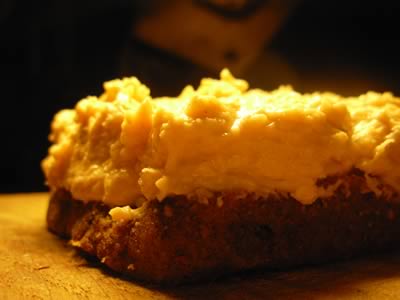
Wow, this was delicious! A chocolate brownie with a chocolate topping with the perfect brownie flavour, coming from the well chose ingredients including walnuts, Brazil nuts, goji berries, raisins and dates. Plus it looks great too!

For anyone strictly raw, this product does contain Sweet Freedom which is a natural fruit based sweetener that isn’t raw, but the other 95% of the ingredients are raw.

It’s just won the Taste of the West Gold award, so another vote for how good it tastes.

For more information and to order, see the Elemnts for Life website.

Raw Milk, Raw Cream and Raw Butter Delivered

In the UK, the law says that you can only buy raw milk direct from the farmer. Which makes buying raw dairy products quite difficult for most people. So I’m excited to tell you about the service from Hook and Son, I got my delivery today. They’ve been delivering raw milk for a while now, and they have just added the raw cream and raw butter to their service.

And even better, if you live in their local area (Eastbourne area) they will deliver in glass bottles, and collect the used ones for re-use, just like in the ‘olden days’!

For more information and to place your order see www.hookandson.co.uk

Recipe: Quick and Easy Fermented Courgettes

Fermented foods have become a big part of my diet in the last 6 months or so. Kefir, sauerkraut, kombucha, fermented vegetables and more. It was the book Wild Fermentation that got me started and I’ve not looked back. I’ve recently discovered a very simple fermented food which can be made in minutes, although of course you need to wait for them to ferment, usually around 3 days: fermented whole courgettes.

For this to work, you need very small courgettes. The ones in the photo are probably a bit too big, it works better with smaller ones.
The process is really simple:

1) Take a kilner jar, (or a screw top jar) and wash well with hot water. The larger the jar, the better, the jar pictured is 1.7 litres.

2) Fill jar with whole courgettes.

3) If desired you can add some flavouring, I’ve used various combinations of grated ginger, grated turmeric, crushed coriander seeds and crushed cumin seeds. It does also work well without any flavouring, just experiment and see what you like.

4) Mix the brine – for each litre of your jar, use 1 teaspoon of salt, so for example for this 1.7 litre jar, use approx 1.7 teaspoons of salt. Mix with water and add to the courgettes so they are completely covered. If necessary, use something to push them under the water if they are floating to the top – a boiled and scrubbed stone works well.

And that’s it. Check every day that the courgettes are still completely submerged, and remove any scum that may form on top. Taste after 3 days. After 6 days or so (or once they are to your liking) you might want to put them in the fridge to stop them fermenting any more.

In hot weather the fermentation happens quicker, in cold weather slower. The more salt you add, the slower the fermentation, so in really hot weather adding more salt can slow the fermentation down and in cold weather less salt will speed up the fermentation.

If you can’t find small enough courgettes, you can also use larger ones and slice them. Make the slices quite thick slices, around 1cm each.

Let me know your favourite fermented recipes in the comments…

Review of Raw Food Controversies by Frederic Patenaude

Why do some people fail on the raw food diet? That is the question that Frederic attempts to answer in his new book “Raw Food Controversies”. He does this by taking us for a ride on his journey over the last 14 years of his life, starting right back at the birth of the modern day raw food movement. The first part of this book is essentially an autobiography, with Frederic including every detail of his life (or so it seems) including his love life, how he met and became friends with David Wolfe and got to work for Natures First Law, and how he met many other famous raw food pioneers including David Klein, Juliano, David Jubb and more. If you have been involved with the raw food movement for many years, you might, like myself, find this section fascinating. If, on the other hand, you are new to the raw diet, you might, like a friend of mine, keep wondering when Frederic is going to get to the point.

This book is very refreshing in that Frederic questions the raw diet, none of the “raw is the best, raw will cure everything” some books are guilty of. Frederic experimented with various different raw diets, including animal foods, fasting even returning to cooked foods for some periods. He realised that raw diet is not simply eating all your food raw and hoping for the best, it needs careful planning.

The first few years on a raw diet left Frederic with a mouth full of cavities, which he discusses in detail, including his view on what cause the problem, and the solutions. If you read this book, I recommend you also read Cure Tooth Decay by Ramiel Nagel, for a completely different view on the subject (I don’t claim to know which author is correct, but if you have problems with your teeth, it’s best to read both opinions).

Towards the end, Frederic starts to pinpoint what he considers to be the ideal raw diet, which is a low fat vegan diet, with lots of fruit. Which is great that he has found a diet that works for himself, but I don’t agree with his belief that the same diet (with minor variations) will work for everyone. One example of how we are all different is the conversion of beta-carotene into vitamin A – we all have a differing ability to make this conversion and those people where this conversion is not optimal will not thrive on a vegan diet.

Frederic recommends a diet containing 7-15% fat, saying that before Western Civilisation took over, most people ate low fat diets, but he misses the research by Weston Price who found that traditional peoples ate diets which contained between 30-80% fat.

I realise that this review is critical, I think that is because this book is written in a way that attempts to show that Frederic’s current diet is the ideal diet for everyone, which I just can’t agree with. So, by all means read this book, but do it with an open mind. It is a very good book, I enjoyed reading it, and it makes some very good points. And the diet recommended might just work for you, but there is also a good chance that it won’t.

Available direct from Frederic’s website.

This review was first published in Issue 19 of the Funky Raw magazine.