The key ingredients of healthy diets

The following article was first published in the Summer 2010 issue of the Funky Raw magazine, but I decided it was quite important to also publish it here. It will also explain the use of a few new ingredients in my recipes.

On March 21st, I went to a conference which changed the way I eat in quite a major way. Don’t worry, I’m still eating mostly raw, but I’ve changed the makeup of my diet. The conference was called “Wise Traditions” and was organised by Philip Ridley (now a contributor to Funky Raw, see page 14) with the Weston A. Price Foundation.

Nutrition and Physical Degeneration by Weston A. PriceWeston Price was a dentist who in the 1930s started noticing changes in peoples jaws and teeth and related degeneration in their health. He thought that this might have something to do with the changes in peoples diets, so he set off on a journey to find tribes of people who had not been influenced by western civilisation. He studied the health of these “primitive” people, found out what they were eating and took photos of their teeth and jaws. He published his findings in a book called “Nutrition and Physical Degeneration”. Now it’s at this point I have to admit that I haven’t yet read the book (although it is on my bookshelf ready to be read very soon), so my analysis is based on what the Weston Price Foundation says.

So, as we would expect, these tribes of people ate lots of raw food and lots of wild food, but some particularly interesting points he found were that all the tribes included at least some animal products in their diet, their diets had fat contents of between 30% and 80% of calories and they all ate a variety of fermented foods.

Now of course I’m not saying that this gives us an ideal diet, there are many factors to take into consideration – we don’t know what the lifespan of these people was, we don’t know how it affected their consciousness or anything else. But it might give us some clues as to how we should eat today.

In a bit more detail, these are the main characteristics of the diets of healthy traditional peoples:

  • No refined or denatured foods: no white sugar or high fructose corn syrup, no white flour, no pasteurised, homogenised, skimmed or low fat milk, no refined or hydrogenated vegetable oils, no protein powders and no synthetic vitamins.
  • All the traditional cultures consumed some animal foods. Generally the whole animal would be consumed including the muscle meat, organs, bones and fat.
  • The diets contained 10 times the amount of vitamin A, D and K2 compared to the average American diet. These vitamins come from animal foods, and only if the animals are pasture fed (eating grass and outdoors).
  • They all cooked some of their food but also all consumed a some of their animal foods raw.
  • They all ate a variety of fermented foods – vegetables, fruits, drinks, dairy and/or meat.
  • Generally seeds, grains and nuts were soaked and sprouted and sometimes fermented.
  • Fat content varied from between 30 to 80 percent of calories, most of this was from saturated and monounsaturated fatty acids with only 4% coming from polyunsaturated oils. The omega 3 to omega 6 ratio was approximately equal.
  • And all traditional diets contained some salt.

As you can see, some of these points tie in with the way most raw fooders eat, but of course some do not. I don’t want to tell you how to eat, and I don’t know enough yet to make any recommendations, but if you are not 100% happy with your current diet, maybe you will find some of this information useful.

Over the last year I’ve occasionally had some fish, because I’ve had strong cravings for it, and I tend to trust my cravings as my body requesting certain nutrients. I’ve found that a small amount of fish every month or so stopped the cravings and helped to keep my diet balanced. I now feel happy about this change and no longer think that it is “wrong” in some way.

Since this conference, I’ve also added cream, butter and kefir to my diet. While I was still living in London, I was getting Hurdlebrook raw cream from Notting Hill Gate farmers market. Kefir is a fermented food made with dairy milk – it’s similar to yoghurt but with improved health benefits and can be made at room temperature. It contains lots of beneficial pro-biotic bacteria. Holly wrote about Kefir in Funky Raw issue 3 so you can check it out if you have a copy, and she will be covering the topic again in the next issue of Funky Raw.

I was already eating a small amount of cheese made with unpasteurised milk, I’m now eating a bit more (and with less guilt that I may be eating something bad for me.)

Resources

The book: Nutrition and Physical Degeneration, by Weston A Price, published by Price Pottenger Nutrition

Weston Price Foundation: www.westonaprice.org

Kefir granules for making your own kefir (which can be used indefinitely, just keep adding milk) can be purchased from www.foodforconsciousness.co.uk

Hurdlebrook – raw milk and raw cream from Guernsey Cows. www.hurdlebrook.co.uk 01458 223229 Available from the following places:

London Farmers Markets: Notting Hill every Saturday, Marylebone and Islington markets on the first and third Sunday of the month. (lfm.org.uk for Farmers Markets).

Chegworth Valley Farm Shop, 221 Kensington Church Street, Notting Hill, London

Shops in Somerset – call 01458 223229 to find out where.

La Fromagerie – also sells raw cheese and raw butter. 2-6 Moxon Street, Marlybone, London lafromagerie.co.uk

Alham Wood – pasture fed raw buffalo milk and cheese. www.buffalo-organics.co.uk 01749 880221. They have stalls at most London farmers markets see lfm.org.uk

Travelling in our van

Our exciting news – we moved out of our flat in London into a camper van:

Camper Van

We’re currently travelling in France, looking for an area we would like to live, where we can buy land to set up some kind of raw food retreat/holiday centre. I will try and keep this blog updated with our progress, photos and of course all the wild food we are finding.

We have found quite a few wild strawberries, but the other day Jolita spotted what looked like a massive patch but on closer inspection we realised that they weren’t strawberries:

Mock strawberry

And here’s a real wild strawberry to compare:

Real strawberry

When I next got access to the internet, I looked it up and found that it is called Mock Strawberry, False Strawberry or Indian Strawberry, Latin Potentilla indica (formerly Duchesnea indica and it is stilled listed as this in some places). It is edible, so next time we found some I tried one – it has almost no flavour and it is white inside just like real strawberries.

Clever music video

Today is a holiday so no raw food, just a fun and very clever video I found while randomly surfing the internet. It’s an acapella version of the Ben Folds Five song Best Imitation of Myself. Hope you like it.

Life is like music (Alan Watts video)

I love this video, it sums up what is wrong with the world at the moment so well. Let me know your thoughts in the comments section below.

“And there is a slight let down because you feel there was a hoax. And there was a hoax, a dreadful hoax. They made you miss everything. We thought of life by an analogy of a journey… and the purpose was to get to that end. But we miss the  point the whole way along. This was a musical thing and you were supposed to sing or dance while the music was being played.”

Raw Chocolate Easter Eggs

Raw Chocolate Easter Eggs

I just got sent a box of raw chocolate Easter eggs from Rawr Chocolate. They came in a cute little egg box made from 100% recycled card, although of course I was more interested in what was inside the box…

On opening the box I found  four eggs wrapped in coloured foil.

There were three flavours of egg, orange zest, after dinner mint and dark purity. All three were delicious, although the mint was my favourite, with a strong cool and refreshing mint flavour. The orange was good but too subtle a flavour for my liking, if I was making it I would have added a bit more orange oil or zest! The dark chocolate ones were great too, with cruncy cacao nibs.

They cost £7.95 for a box of four which includes free delivery and you can choose any combination of flavours. The eggs are solid chocolate and weigh 70g each – that’s a lot of chocolate so try not to eat it all at once (unlike me!). You can order direct from Rawr here.

Raw Easter Egg

5 Tips for a Healthy New Year

It’s that time of year again – new years resolutions, attempt to eat more  healthily, loose a  bit of weight… here are 5 ideas for you:

  1. Eat more fresh fruit and vegetables. Fruit and veg should be the cornerstone of any healthy diet. Try having some fruit for breakfast and/or a salad with your dinner.
  2. Get some exercise outdoors every day. It doesn’t have to be too much, but try and do a little every day – a walk in the park, cycle to the shop, etc.
  3. Replace junk food snacks with healthy snacks. Fresh fruit or dried fruit and nuts can make great snacks. Replace unhealthy chocolate with healthy raw chocolate.
  4. Grow your own sprouts. Sprouts are highly nutritious, full of enzymes and are easy to grow in your kitchen. Some good seeds, beans and grains to try: sunflower seeds, rye, mung beans.
  5. Learn how to make tasty healthy food. Get yourself a good raw recipe book, or go on a course. If you know how to make delicious food which is healthy, you are more likely to be able to stick to a healthy diet.

On Jan 10th, Jolita and myself are running an introductory raw food workshop. We’ll teach you how to make lots of healthy raw foods, including a raw lasagne and raw curry, along with healthy cakes and chocolate. A small group size allows time for your questions.

Raw Recipe Book Mini Reviews

I often get asked to recommend raw recipe books, so here’s a selection of my favourites:

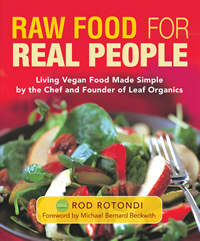
Raw Food for Real People by Rod Rotondi is a new book which I like a lot, it covers everything from pizza to lasagne, hummus to falafel, the sections include crackers and bread, breakfast, appetizers, soups, entrées and deserts. Every recipes is described clearly plus variations and ideas for experimenting are given.  It also includes guest sections from Brian Clement, Robert Young and Gabriel Cousens plus general raw food prep techniques. You can read my full review of it here.

Ani’s Raw Food Kitchen is another book which looks amazing. I don’t currently own this book, but it is a book I want to get a some point, it covers all the standards including soups, raw cheeses, raw milks, lasagne, burgers,  pies, cakes, and more. More details on Amazon.

Raw Magic by Kate Magic Wood is another amazing book, again with full colour all the way through and beautiful photos. There are both sweet and savoury recipes but all of them contain superfoods. The first part of the book contains detailed information about the nutrition and uses of superfoods including maca, cacao, goji berries, purple corn, camu camu, suma, hemp and more. The recipes are divided into the following categories: dips and dressings; salads and savouries; crackers, breads and burgers; puddings & breakfasts; cakes & biscuits; sweets & spreads; chocolate; and drinks.

Raw The Uncook Book  by Juliano is an older favourite of mine, it is full colour all the way through and has some very inspiring photos of the food but the recipes can have long lists of ingredients and be a little complicated.

The book starts with “Learning to un-cook” which includes equipment, sprouting, juicing, etc. The recipes are divided into soups; salads; breads; snacks, appetizers & side dishes; sushi, pizza; main courses; desserts; drinks & smoothies; dressings, sauces, marinades & condiments; and the raw dairy (vegan).

And finally Evie’s Kitchen by Shazzie – it’s aimed at parents for making food for children, but adults seem to love it too. About half the book isinformation on raising raw chidren and the other half is recipes.

Shazzie covers everything you might need to know about consciously raising your child – natural birthing, breastfeeding, vaccinations, co-sleeping, communication and more. There is a whole chapter devoted to the nutritional needs of babies and children.

  • dips and dressings
  • salads and savouries
  • crackers, breads and burgers
  • puddings & breakfasts
  • cakes & biscuits
  • sweets & spreads
  • chocolate
  • drinks

How to make Nut Milk and Seed Milk

How to make almond milk? How to make hemp milk? Is soya milk raw?

I often get asked these kind of questions, including if shop bought soya milk or almond milk is raw. The answer is unfortunately no. To make soya milk, the soya beans are first cooked, and other milks are usually pasteurised.

Making hemp milkThe good news is that it is relatively easy to make you own milk with most kinds of nuts or seeds. Hemp milk is particularly nutritious with good quantities of omega 3 fatty acids, but it doesn’t keep too long. Almonds, sunflower seeds, sesame seeds, pumpkin seeds, chia seeds and mature coconuts all make good milks.

Instructions to make your own milks:

  1. Soak your nuts or seeds, preferably for about 8 hours, but less will do if you don’t have time. Mature coconut doesn’t need soaking, and chia seeds can be soaked for 20 mins (or longer if you want).
  2. Drain the nuts or seeds and rinse in clean water.
  3. Add to blender with enough water to cover plus about half as much again. (The more water you add, the thinner the milk will be. The less water, the thicker the milk, but if you make it too thick, your blender might have difficulty blending.) If you are using coconut, you can use the coconut water which adds a delicious sweetness to the milk.
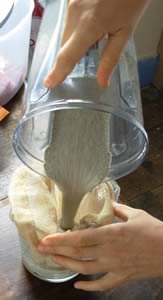
  4. Squeezing hemp milk through bagBlend until relatively smooth.
  5. Optional for most nuts and seeds, necessary for hemp seeds: strain the milk through either a nut milk bag, cheesecloth or sieve.

If you prefer sweeter milk, you can add some dates or other soaked dried fruit or a few tablespoons of lucuma or other raw sweetener.

Once you have your milk, you can either drink it as it is, or use it to make a milkshake or smoothie.

Paul Nison talks about why he is no longer vegan

I found the following videos very interesting:

Edit March 2026: Unfortunately these videos are no longer on Youtube

As you may already know, I follow a non-vegan raw diet. I regularly include a small piece of cheese made from unpasteurised goat or sheep milk in my diet and more recently I’ve started to include a very small amount of fish, this is tending to be once every couple of months. The reason I do this is that it seems to cover any nutritional deficiencies in my diet. I believe that cravings are a sign of nutritional deficiencies and when I eat a small amount of animal produce I no longer get any cravings.

No animals in the wild are vegan – even cows eat insects along with the grass they consume and our closest relatives in the animal kingdom, Bonobos, eat insects and occasionally small mammals. I actually think eating insects would be a lot more natural for us but this is difficult when living in the city but when I’m living in a situation closer to nature then I plan to try and replace the animal produce I currently eat with insects.

Book Review: Raw Food for Real People

Here’s my review of Rod Rotondi’s new recipe book Raw Food for Real People, as originally published in issue 14 of the Funky Raw magazine. (The magazine also includes an extract from the book.)

Raw Food for Real PeopleFive years ago, Rod opened his first raw food restaurant, Leaf Organics, and has since opened several more raw restaurants. With that experience, he is well qualified to write this book in which you can learn how to prepare your own restaurant quality raw dishes. The book begins with Rod’s journey to raw food, which includes his experiences of living in Jerusalem and Sinai. Combined with the fact that Rod is from an Italian American background, this adds quite a variety of influences to his recipes.

Then there are sections on transitioning to a raw diet, guest sections from Brian Clement, Robert Young and Gabriel Cousens plus Rod teaches us how to use knives, how to open coconuts and how to grow sprouts, including a detailed sprouting chart.

Then come the recipes. From pizza to lasagne, hummus to falafel, the sections include crackers and bread, breakfast, appetizers, soups, entrées (what we call mains in the UK) and deserts. Every recipes is described clearly plus variations and ideas for experimenting are given. Finally, there is a section on feeding children a raw diet.

Just reading some of the recipes and looking at the colour photos makes my mouth water, I’m very much looking forward to trying some of them out.

185 pages, printed on 100% post consumer waste recycled paper. ISBN: 978-1-57731-673-2

You can buy this book now at Amazon.